
How is AI Redefining Leadership and Management in 2026?
AI is redefining leadership and management by shifting the leader’s role from sole decision-maker to a strategic conductor who directs both human teams and intelligent systems. AI is making human judgment more important, not less. AI is enhancing decision-making, driving organisational innovation, and demanding new skills around ethics, data governance, and reskilling. The human element remains non-negotiable, but how it is applied is changing fundamentally.
A Leader’s Story
The data said the campaign would work.
A leader I worked with used an AI tool to analyse his company’s audience, identify the highest-converting segments, and shape the messaging strategy. The numbers were clean, the logic was sound, and he trusted it more than he trusted himself.
He overrode his gut feeling that the tone was off and the timing was wrong. The AI disagreed, so he deferred.
The result? A marketing campaign that failed. Flat engagement, poor conversions, a team that had worked hard on something that went nowhere.
His mistake was forgetting that he still needed to take his human instincts and experience into account when using AI.
That experience taught him something I have since seen confirmed across nearly every leadership context I work in: AI is a powerful instrument, but it is not a substitute for judgment. It needs a conductor.
Key Takeaways
- AI makes human judgement more important, not less. As AI systems become more autonomous, the quality of leadership decisions determines how much value those systems create or destroy.
- Agentic AI is already in your organisation, or will be soon. These systems do not wait for a prompt. They plan, reason, and act. Leaders who treat AI as a tool they control will be caught off guard by systems that initiate.
- Redesigning work around AI produces dramatically better results than layering AI onto existing processes. McKinsey found that organisations which fundamentally redesign their workflows are 2.8 times more likely to report meaningful gains.
- Training alone will not close the AI capability gap. The challenge is not just access to information. It is access to experience. People build confidence by doing.
- If AI fluency pools at the top of your organisation, you have created a two-speed workforce. The divide that emerges over the next few years may not be between organisations. It may emerge inside them.
- Ethical AI is not a technology problem. It is a leadership habit. Bias accumulates until someone asks the right question. Leaders need to ask it before a system goes live, not after.
- Leaders cannot delegate accountability to a process. When an AI system gets something wrong, and it will, someone needs to own that. Organisations with clear executive ownership of AI governance consistently manage incidents better than those without it.
- The harder questions are the most important ones. Is the system fair? Have people been genuinely equipped to use it? When something goes wrong, does accountability rest with a person?
Table of Contents
We are Managing a Different Kind of Workforce Now
PwC’s 2026 AI Business Predictions describe a shift that most leaders are still catching up with. Agentic AI (systems that can plan, reason, and execute complex tasks autonomously) is moving from experiment to operational reality.
Companies and organisations are embedding agents into their workflows. They are redesigning roles around them.
The term “agentic AI” is used loosely, so it is worth being precise. Traditional AI tools respond to prompts. You give them a task; they produce an output. The human orchestrates every step.
Agentic AI works differently: these systems can plan, reason across multiple steps, use tools, and execute workflows without a human directing each stage.
A traditional AI might draft a summary when asked.
An agentic system might monitor an inbox, identify a relevant customer issue, retrieve the account history, draft a response, flag it for human review, and update the CRM, all without prompting and in sequence.
McKinsey’s State of AI 2025 report confirms a massive shift: organisations are moving beyond simple pilots to ‘agentic workflows,’ where AI actively manages complex processes rather than just generating content. This allows leaders to move beyond efficiency and truly reinvent their operational models.”
What surprised me most in the research was how quickly this shift is happening. As of November 2025, 62% of organisations are at least experimenting with agents, and 23% are already scaling agentic systems in at least one function.
For the leaders I speak with, this is where the conversation usually changes. AI stops being a technology discussion and becomes a leadership discussion. Once systems begin to initiate actions rather than simply respond to prompts, questions of accountability, oversight, and judgement move squarely onto the leadership agenda.
The challenge runs deeper than most leaders expect.
Integrating AI into leadership is not just about embracing AI-human collaboration and adopting new technologies.
It is about reimagining how we lead, make decisions, and support our teams. The need for human judgment does not disappear as AI becomes more capable. It becomes more important.
Leverage AI in Corporate Leadership
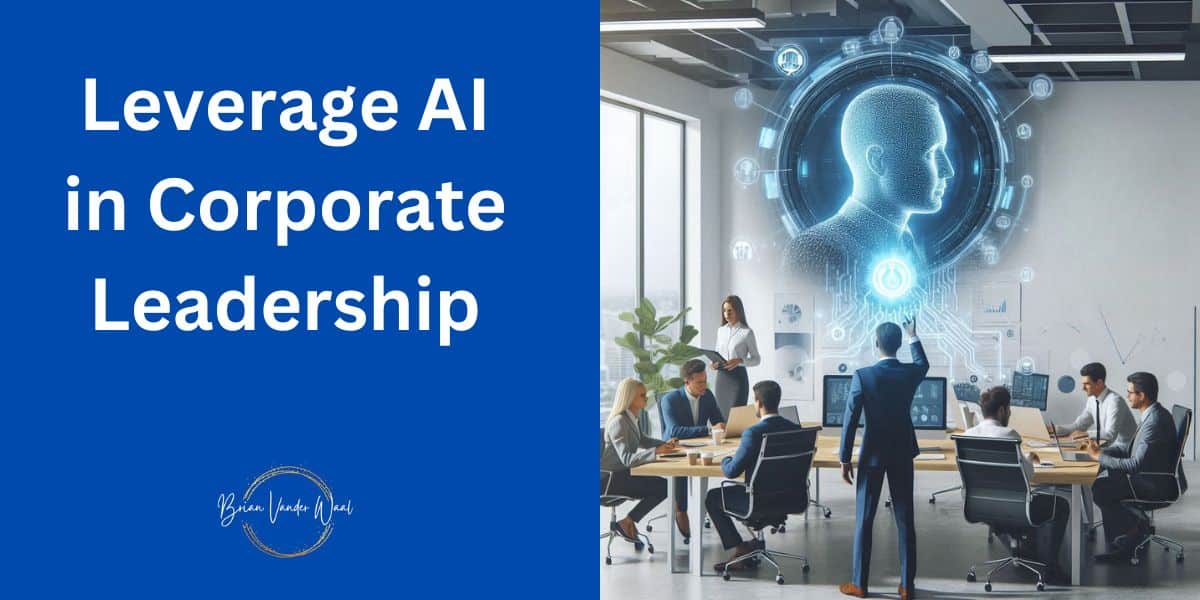
When AI takes on routine work, analysis, reporting, and monitoring, it returns to a leader time and cognitive space. What leaders do with that space is the more interesting question, and the more revealing one.
The sections below cover three areas where this shift is most visible in practice: how AI supports strategic decision-making, how predictive analytics changes what leaders can see before a problem surfaces, and how AI is reshaping what organisational innovation looks like day-to-day.
Leveraging AI for Strategic Decision-Making

According to foundational research by McKinsey, Generative AI could unlock a staggering $4.4 trillion in additional annual profits for businesses worldwide, underscoring the substantial financial benefits of data-driven leadership.
Yet McKinsey’s State of AI 2025 survey of nearly 2,000 organisations across 105 countries found a significant gap between adoption and genuine transformation. Almost nine in ten organisations now use AI regularly in at least one business function. That looks like progress.
Look closer, and a different picture emerges.
Only about one in five organisations has fundamentally redesigned any of its workflows to incorporate AI. The rest layer new technology onto existing processes.
McKinsey’s analysts described it as installing a jet engine on a horse-drawn cart. The engine works. The vehicle cannot handle it.
I think that analogy reflects a pattern I see repeatedly: organisations invest in the technology but leave the underlying process untouched. It explains why so many AI projects disappoint.
Many leaders still treat AI the way they treated CRM systems in the early 2000s: a useful tool, adopted by the team, improved over time, reviewed quarterly. It sits within the organisation. It responds when called upon. It does not initiate.
That approach is becoming a competitive liability.
What stands out to me is that the most successful organisations analyse whether their processes still make sense now that AI exists.
These companies are nearly three times more likely to have scaled AI agents across multiple functions and 2.8 times more likely to report having fundamentally redesigned their workflows.
In other words, the biggest gains rarely come from adding AI to existing ways of working. They come from rethinking how work gets done in the first place.
Using Predictive Analytics to Support Informed Decision-making
One key area where AI’s transformative potential shines is in providing predictive analytics that support informed and strategic decision-making. Leaders can use AI tools to analyse large datasets, identify trends, and forecast future scenarios, empowering them to make proactive decisions aligned with organisational goals. As a result, this capability can dramatically enhance a company’s agility and competitiveness.
For example, a friend shared that one of their company’s most significant wins was using AI to optimise their supply chain. The AI system processed data at remarkable speeds, uncovering patterns they had never noticed before. As a result, they cut costs by 15% and improved delivery times by an entire week. Their CFO was thrilled with the improvements. This example clearly shows how AI can directly impact operational efficiency and profitability.
The wider value of predictive analytics lies in helping leaders spot developments earlier than they otherwise would.
Market shifts, changes in customer behaviour, emerging operational risks, and fluctuations in demand often signal problems long before they become obvious. AI can help surface those signals sooner.
That does not eliminate uncertainty, nor does it guarantee the right decision. However, it can give leaders more time to evaluate options and respond before circumstances force their hand.
Another powerful application of AI is in predicting customer behaviour. Some companies have seen their conversion rates soar after tailoring their marketing strategies based on insights derived from AI. Companies can develop more focused and impactful marketing campaigns by understanding customer preferences and behaviours.
Examples of predictive analytics tools to consider include Alteryx, Tableau, Amazon QuickSight (for small businesses), and Altair RapidMiner (the best free option). The best predictive analytics tool will often depend on the industry you are in and the tools you are already using.
The Role of AI in Driving Organisational Innovation

I have often heard people portray innovation as a moment of inspiration. In practice, it is usually the result of seeing something others have missed.
One of AI’s most useful contributions is its ability to surface patterns, inefficiencies, and opportunities that would otherwise remain hidden beneath large volumes of information.
A LinkedIn contact shared how his company used AI to optimise its manufacturing processes. They identified inefficiencies that had been overlooked for years, leading to a remarkable 20% increase in productivity.
AI does not make organisations more innovative by itself. What it does is give leaders and teams a clearer view of where change may create value.
An excellent use case for AI is automating research and development processes, which can dramatically speed up time to market for new products. This capability not only enhances innovation but also improves responsiveness to market changes. For example, Lexoro.ai, is excellent for the medical and pharmaceutical fields, but it also has use cases for other industries.
One of the coolest things I implemented was an AI-driven project management tool called Asana (free for up to 2 users on the Personal plan). This tool could predict potential bottlenecks in our workflows before they even happen.
Redefining AI-driven Leadership Practices
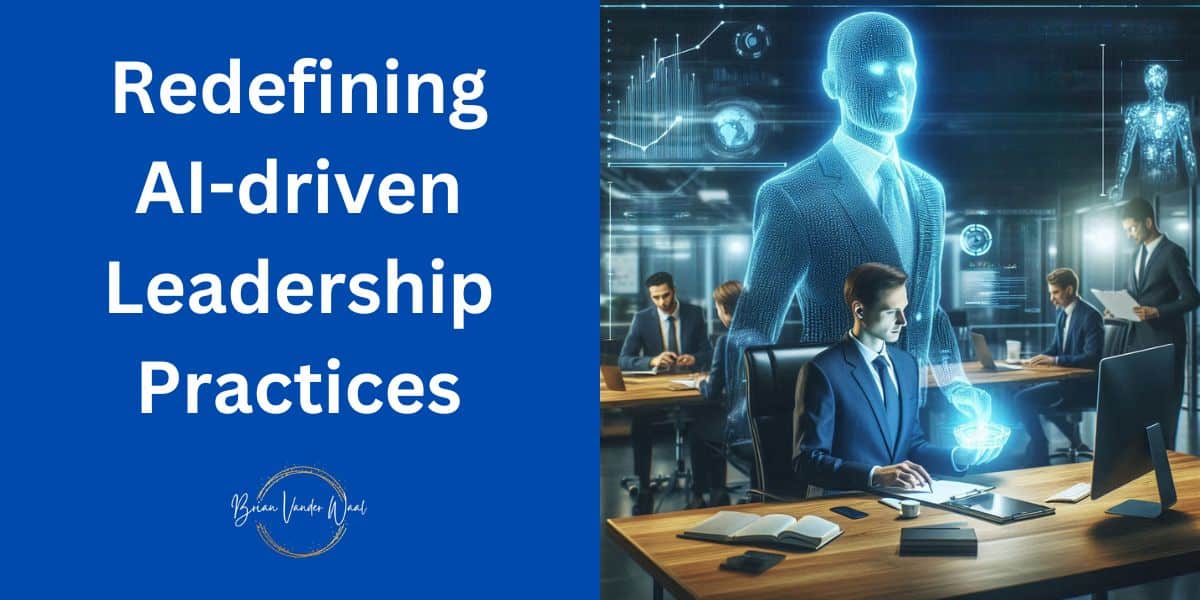
How leaders develop themselves and their teams has always mattered. What has changed is the cost of getting it wrong.
A leader without real AI fluency, leading a team that has never been given a chance to build it, rarely looks like a problem until it is. By then, it has already shown up in flagging performance, hesitant decisions, and projects that stalled.
The Reskilling Imperative: Are You Leaving Your Team Behind?
PwC’s Global Workforce Hopes and Fears Survey 2025 found that 72% of senior executives say they have access to the learning and development resources they need to master new tools. Only 51% of non-managers say the same.
The same research found that just 14% of workers globally use generative AI every day.
That disconnect points to a leadership challenge that receives far less attention than strategy, governance, or productivity.
I see this gap surface in coaching conversations more often than leaders expect.
One senior manager described an ambitious AI strategy that would reshape how their team worked. The business case was compelling, and the objectives were clear.
However, when I asked how many team members had been given a meaningful opportunity to develop confidence with the tools involved, the answer was surprisingly few.
The strategy was sound, but the people expected to deliver it had never been given the opportunity to build confidence with the tools they depended on.
That gap matters.
When leaders operate with one level of understanding and their teams operate with another, organisations create a confidence gap alongside a skills gap.
People hesitate to challenge decisions they do not fully understand. Others avoid using new tools because they worry about getting things wrong. Some conclude that future opportunities belong to somebody else.
None of this appears neatly in a monthly performance report. Leaders usually encounter it later through slow adoption, inconsistent results, or frustration that a promising initiative never gained momentum.
Why Training Alone Will Not Fix It
Many organisations respond in predictable ways. They organise a workshop, launch a learning platform or encourage staff to complete an online course.
None of those things is necessarily bad. They are simply not enough on their own.
The challenge is not just access to information; it is access to experience.
People build confidence by testing ideas, asking questions, making mistakes, and learning in an environment where experimentation feels safe. Real fluency develops through practice, not simply through exposure to content.
That requires leaders to stop treating learning as an individual responsibility and start treating it as an organisational one.
A Different Leadership Question
Earlier in this article, I argued that leaders cannot outsource judgement to AI. I also explored why accountability remains a human responsibility, even when intelligent systems initiate actions on our behalf.
The same principle applies here. Leaders cannot outsource capability building.
If only a small group of employees gains the confidence to work effectively with new tools, organisations risk creating what I call a two-speed workforce: a divide between people who had the opportunity to learn and people who did not.
That distinction matters because opportunity shapes confidence, confidence shapes adoption, and adoption shapes who benefits from change.
Building Your Own Fluency
Leaders still need to develop their own understanding first, building real knowledge of AI applications and data analytics rather than a surface-level grasp. You cannot guide people through territory you have never entered yourself.
To gain the strategic knowledge needed to drive this cultural shift, consider upskilling yourself or your leadership team through Vanderbilt University’s online Generative AI Leadership & Strategy Specialization.
This specialisation includes the following individual courses, which you can also take on their own:
Another beginner-level course for you to consider is IBM’s Generative AI for Executives and Business Leaders training.
Managing People in the Age of AI
One assumption I encounter most often is that AI will make managing people easier.
In some ways, it does.
Leaders can now access insights that would previously have taken weeks to gather. AI tools can identify communication bottlenecks, highlight workload imbalances, surface employee sentiment trends, and flag performance issues before they become obvious.
However, more information does not automatically lead to better leadership.
In fact, it can create new risks.
A manager who relies too heavily on dashboards may start seeing people as data points rather than individuals. Equally, a manager who ignores useful insights that conflict with personal assumptions may miss problems already emerging beneath the surface.
The challenge is deciding how much weight to give to AI-generated insights.
I have seen leaders use employee sentiment data to identify concerns that might otherwise have gone unnoticed. I have also seen leaders place so much trust in the numbers that they stopped having the conversations needed to understand what was actually happening.
Neither extreme works particularly well.
The most effective leaders tend to treat AI as an additional source of information rather than a substitute for observation, experience, and dialogue.
Tools such as Qualtrics and ThriveSparrow can help leaders understand communication patterns and employee sentiment across large teams. Performance management platforms such as 15Five can highlight trends and provide useful prompts for coaching conversations.
Used well, these tools help leaders ask better questions. Used poorly, they encourage leaders to believe they already know the answers.
As AI becomes more embedded in workplace management, one skill will become increasingly valuable: knowing when to trust the data and when to look beyond it.
AI Ethics and Governance
Embracing AI as a leader requires a strong awareness of AI’s ethical considerations. Leaders and managers must ensure decisions are sensible and aligned with the company’s values. Leaders must prioritise ethical AI practices to ensure responsible and informed decisions.
Here is an example of where it went wrong.
The HR team at a large organisation hit a snag.
Fantastic candidates were overlooked by the AI recruitment tool they were using for talent acquisition. Eventually, the organisation discovered that its tool was favouring certain demographics.
The pattern only surfaced when someone finally asked why a particular group of strong candidates kept dropping out of the shortlist.
That was the moment the conversation in the room changed. It stopped being about the tool and started being about the team and its leaders.
What the Recruitment Tool Got Wrong
The organisation had adopted a well-regarded AI recruitment platform, trained their team on it, and trusted its output, much as most organisations trust a system that appears to be working.
The bias was not in a single decision. It was in the pattern underneath thousands of decisions, built into the training data long before anyone in that room ever saw a candidate’s résumé.
That is what makes algorithmic bias difficult to manage. It rarely announces itself. It accumulates until someone notices the shape it has left behind, and by then it has already affected people.
Building the Framework
After reading my article on the Best AI Recruitment Tools, the organisation reached out to me for further guidance. I advised them that they needed to be just as rigorous in their approach to AI ethics as they were in implementing the technology.
What followed was not a quick fix. I facilitated a series of discussions with the senior leadership team about the ethical implications of AI in their decision-making processes. Some of them ran long and got uncomfortable.
Nobody likes hearing that a system they trusted has been working against the values they claim to hold. But the discomfort did its job. It forced the kind of scrutiny that a smoother conversation never would have.
What came out of it was an ethical framework the organisation still uses. Before any new AI application goes live, it gets run through a small set of questions.
Is it fair?
Is it transparent?
Are biases being built into the system without anyone intending it?
The questions are simple. Answering them honestly is not.
The deeper shift was cultural rather than technical. The organisation’s leadership stopped treating ethics as a compliance exercise that happened after a tool was chosen and started treating it as part of the choice itself.
Why This Belongs With the Leader, Not the AI Tool
It would be easy to read this as an argument for better algorithms or more careful vendors. That is part of it, but not the heart of it.
The heart of it is that leaders cannot outsource ethical judgement to the tools they consider and use.
Leaders who ask, and continue to ask, whether a system is fair, transparent, and free of baked-in bias are doing something an algorithm cannot do on its own.
AI can flag inconsistencies once you know to look for them. It cannot decide what fairness means in your organisation, or whose interests get weighed when a decision affects people unevenly.
That remains a human responsibility, and it sits with leadership whether or not anyone has written it into a job description.
The Practical Starting Point
If you lead a team that uses AI in any decision affecting people, such as hiring, promotion, performance, or customer treatment, the starting point is not a policy document. It is a habit.
Before a new system goes live, leaders need to ask the same questions about fairness, transparency, and bias that this organisation now treats as routine.
Then once the system goes live, you must continue to evaluate the tool and revisit those questions regularly.
That habit will not catch everything. Bias has a way of hiding in places nobody thought to check. However, a leadership team that asks the question consistently will catch far more than one that never asks it at all. It sends an unmistakable signal to everyone in the organisation about what is actually valued.
The Challenges of AI Leadership
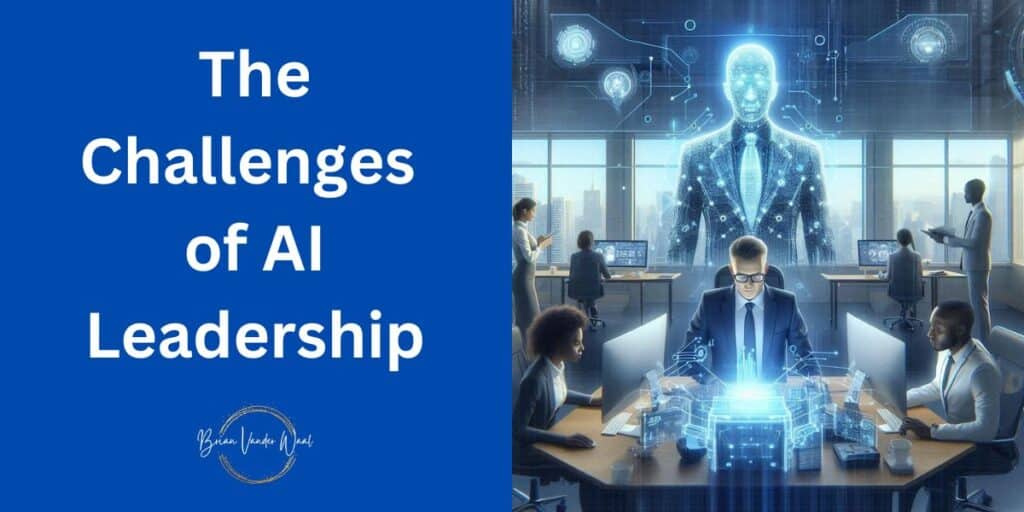
The ethical framework above addresses one category of challenge. Others are less about values and more about practical reality.
Navigating the Complexities of AI Leadership With Strategic Planning
Leading through an AI transition is straightforward when the technology works and the team is on board. The harder test comes when it does not, or they are not.
Data privacy concerns, workforce anxiety, and questions about who is accountable when an AI system gets something wrong do not resolve themselves through adoption alone.
They require the same qualities that have always distinguished good leadership: clarity about what the organisation stands for, honest communication with those affected, and a willingness to make difficult calls rather than defer to the system.
Challenges and Opportunities in AI-Driven Data Governance & Leadership
Integrating AI into data governance and leadership practices poses challenges to data privacy, security, and ethical AI usage. Therefore, leaders must ensure that data governance frameworks align with AI integration strategies to maintain transparency and accountability in decision-making processes.
Building on the ethical checklist above, a few structural steps are worth implementing alongside it.
- Start with a solid data governance framework. Develop a comprehensive policy that outlines how data should be collected, stored, and used across all AI applications.
- Prioritise data privacy and security. Implement strict access controls and encryption protocols for all AI systems handling sensitive information. It’s crucial to stay ahead of potential breaches.
- Create an AI ethics committee. This cross-functional team can review all AI initiatives to ensure they align with your company’s values and ethical standards.
- Implementing robust data governance practices is essential to mitigate risks and optimise the benefits of AI in leadership.
By following these practices, you can harness AI’s power while maintaining strong governance and ethical standards. It’s not always easy, but the benefits to your decision-making and operations will be worth it.
Navigating the Future: Strategies for Integrating AI in Leadership

Effective integration of AI in leadership requires strategic planning and a forward-thinking approach to use AI technologies successfully. Leaders must develop clear strategies for AI integration, ensuring that AI complements existing leadership practices rather than replacing them.
To effectively integrate AI into leadership, consider these additional strategies:
- Encourage a culture of innovation: Promote a mindset of continuous learning and exploration of AI tools and applications. Create safe spaces for employees to experiment and share their findings. Consider allocating resources for AI pilots and proof-of-concept projects.
- Invest in AI talent development: Build a strong internal AI team or partner with external experts to ensure the organisation has the necessary skills to develop and deploy AI solutions. Create opportunities for staff to advance their skills and knowledge in AI. Consider partnerships with universities or AI institutes for talent acquisition.
- Prioritise data quality: High-quality data is essential for AI success. AI is only as good as the data it’s trained on. Implement robust data management practices, including data cleaning, validation, and enrichment.
- Measure and optimise AI initiatives: Set key performance indicators (KPIs) to monitor the effectiveness of AI projects. Continuously monitor and refine AI models and applications to maximise their value.
- Collaborate with external partners: Explore partnerships with AI startups, research institutions, or industry experts to accelerate AI adoption and gain access to cutting-edge technologies.
- Anticipate and address AI risks: Proactively identify potential challenges such as job displacement or cybersecurity threats, and develop mitigation plans to ensure a smooth transition.
Three Questions Worth Considering
If you lead a team or an organisation, three questions worth reflecting on before you move on.
1. Are you using AI as a tool, or have you started redesigning how work flows around it?
The difference is not cosmetic. The former is a productivity improvement. The latter is a fundamental one.
2. Is capability building on your leadership agenda, or have you delegated it to HR and assumed it’s being handled?
The two-speed workforce does not emerge from a single decision. It emerges from a long series of decisions where nobody asked that question directly.
3. When AI in your organisation makes a mistake, and it will, who is accountable?
McKinsey’s State of AI 2025 found that 51% of organisations reported at least one AI-related incident in the past year.
The 2026 AI Trust Maturity Survey adds a sharper finding: incident frequency has stayed roughly stable, but confidence in how organisations respond has declined.
Organisations with clear executive ownership of AI governance consistently report greater confidence in managing AI-related incidents than those with unclear responsibility.
These are not questions for a future transformation programme. They are questions for your leadership team today.
Conclusion: How is AI Redefining Leadership and Management
Throughout this article, the same idea has surfaced in different forms. Leaders cannot outsource judgement, delegate accountability, assume capability, or treat ethics as a compliance exercise that happens after they make real decisions.
What AI does, when leaders engage with it seriously, is raise the stakes for all of those things.
The leader who deferred entirely to his AI campaign tool did not make a technology error. He made a leadership error.
The organisation whose recruitment platform developed a systematic bias could not blame the problem on AI. It had a governance problem that the technology made visible.
AI does not reduce the need for human judgement. It increases the consequences of getting it wrong.
Navigating this well means continually asking harder questions. Is the system fair? Have people been given a genuine opportunity to build confidence with it? When something goes wrong, does accountability still rest with a person rather than disappear into a process?
Those questions belong on your agenda today.